August Workshop: How to Make Books

Heads up for you blog-reading types: I’ll be teaming up with my friend Mike Monteiro next Friday (August 28th!) to offer an info-packed 90-minute online workshop on MAKIN’ BOOKS.

How to Make Books with Mike Monteiro and Lucy Bellwood. Friday, August 28th, 10-11:30am PT.

Mike and I have decades of combined experience crafting books, graphic novels, zines, and weird one-off projects from start to finish, and we want to help YOU finish making your thing! We’ll be diving into managing creative projects, tackling print design, traditional vs “self” publishing, The Dreaded Promotion Fandango, and everything else we can think of.

Subject matter is dependent on who shows up and what they’re interested in, so bring us your specific quandaries. (I also have it on good authority there will be helpful creative folk scattered throughout the audience, in case you’re hunting for a good editor, print broker, or other ally in your quest.)

How to Make Books takes place on Zoom from 10-11:30am Pacific Time on Friday, August 28th. Tickets are $55.20, but if you’re a Patron of mine you get a special 10% discount code at the end of this post. Can’t afford to attend? Drop me an email and I’ll see what we can do. I want this information to be available to folks who need it.

Hope to see you next Friday!

For Peter

I’m spending a lot of time at memorials these days.

Partly it’s to do with living in a small town with a median age well above the national average. Partly it’s to do with loving people, being close to them, and wanting to stay present when they go.

I had the chance to speak about my 7th grade teacher, Peter Thielke, this past Saturday. I think more people should know about this lovely man, so I’m republishing my speech on my blog. Writing—and especially writing that expects to be read aloud—has been feeling so alive to me lately. Good thing, too: I have to write another one of these (for my dad, no pressure) in the next five weeks.

Anyway, here are some words:

A decorative divider of art nouveau-style clarkia seed pods.

Hello, everyone. My name is Lucy Bellwood. I had the great joy of being Peter’s student almost 25 years ago.

I was twelve when we met. The teachers I’d had at Oak Grove up till then had taught me many things, but a fluent understanding of mathematics was not among them. I entered 7th grade carrying a level of insecurity around the subject that often left me near tears.

Peter was into math the way other people are into sports teams. His patient encouragement, carrying over into many after-school study sessions, taught me to tolerate the discomfort of not knowing. I didn’t learn to love math that year, but I learned that it rewarded persistence; that I was capable of arriving at an answer. I know now that this is a much higher predictor of success than intelligence or expertise.

He taught me many truths, but there was one lie I carried for years after leaving his class.

We’d built our own desks that year. The classroom was littered with them—some low and curved, others precise and upright, some with drawers and some without, all in shades ranging from deep mahogany to pale birch. Each one felt like an extension of the student who’d built it. (Mine, a low walnut crescent moon, is now a desk for a twelve-year-old I love in Ojai. I’ve visited another in Flagstaff, Arizona. A third sits in a classmate’s parents’ living room on Shady Lane. They stay with us.)

I’d spent years telling people that yes indeed, my 7th grade teacher taught us to design and build our own desks. It felt like the perfect encapsulation of my time at Oak Grove.

So when I had the chance to see Peter in the months before his death, I made sure to tell him about my desk, and about the people I’d shared it with, and how grateful I was he’d given us that freedom to experiment and learn under his guidance.

He raised his eyebrows. “But that was your idea.”

I was speechless. He was insistent. 

He said that yes, he’d had students build desks every year, but before our class came along they’d all been built to the same specifications. “It was you, Lucy Bellwood, who asked why you couldn’t each come up with your own designs.”

How could I have forgotten? 

“I had a bit of an educator’s crisis about it,” he admitted. “I went home and wrestled with the idea for days before I said yes—and then it turned out to be so fun.”

My appreciation for his teaching deepened so much that morning, because it was clear that none of this happened by accident. Peter weighed the options, and then he made a choice. Guiding sixteen kids through their own design process was undoubtedly more work than having them build from a single plan, but it was the richer option by far. 

Granted: there were limits. He said I’d wanted a four-poster frame with a canopy as part of my design, which was a firm no-go. This, too, is good teaching. Sometimes we need guardrails. But he said “yes” to us in so many other ways—when we wanted to build a ladder to the loft in our classroom or paint a mural on the wall. He gave us ownership of our quest for knowledge.
In the months since that conversation, I’ve realized how much Peter’s skill as a woodworker infused his teaching practice. Wood, like people, has its own opinions about where it wants to go. Education is often conceptualized as a top-down process—the expert imparting wisdom to the inept. Peter understood that it is far more rich and strange: the teacher reveals to the student what they are capable of. He honors their curiosities, their instincts, their passions. He collaborates. He brings out the luster of the grain.

My father died almost a year ago. His decline was long, and marked by a lack of lucidity that meant I never got to have the kinds of conversations with him that I had with Peter. Caring for my dad over the last five years of his life left me out of touch with myself, but it also brought home the truth that it is vital to spend time with the people we love while they are alive. This is true whether or not they can carry on a conversation. We must tolerate the discomfort of not knowing how long we have.

As I cycled home from my last meeting with Peter, still crying through the scent of orange blossom, I remembered more about the 12-year-old I’d been. I’d spent so much time focusing on her inexperience, her insecurity, her bad-at-math-ness, that I’d forgotten her creativity and boldness. I’d forgotten about her willingness to try.

This was the gift he gave me. Even after so many years and so many students, he saw me at a time when I was, once again, struggling to see myself. And he gave that gift the same way he always had: with ease and humor and encouragement—even in the face of his own mortality.

This is what the very best teachers do: they give us back to ourselves.

Thank you for being here to celebrate him. May we each carry on his work in our own way.

A low, crescent-shaped desk with papers and a drawing tablet scattered across the top.

New Comic: The Scale of a Man

Busy week at Bellwood HQ.

We’ve got our celebratory Seacritters-Book-1-is-Nearly-Done Community Zoom coming up tomorrow, but I also wanted to release this comic in time for the opening of its physical exhibition in Savannah, so we’re getting a double-barrel week on two very different emotional notes.

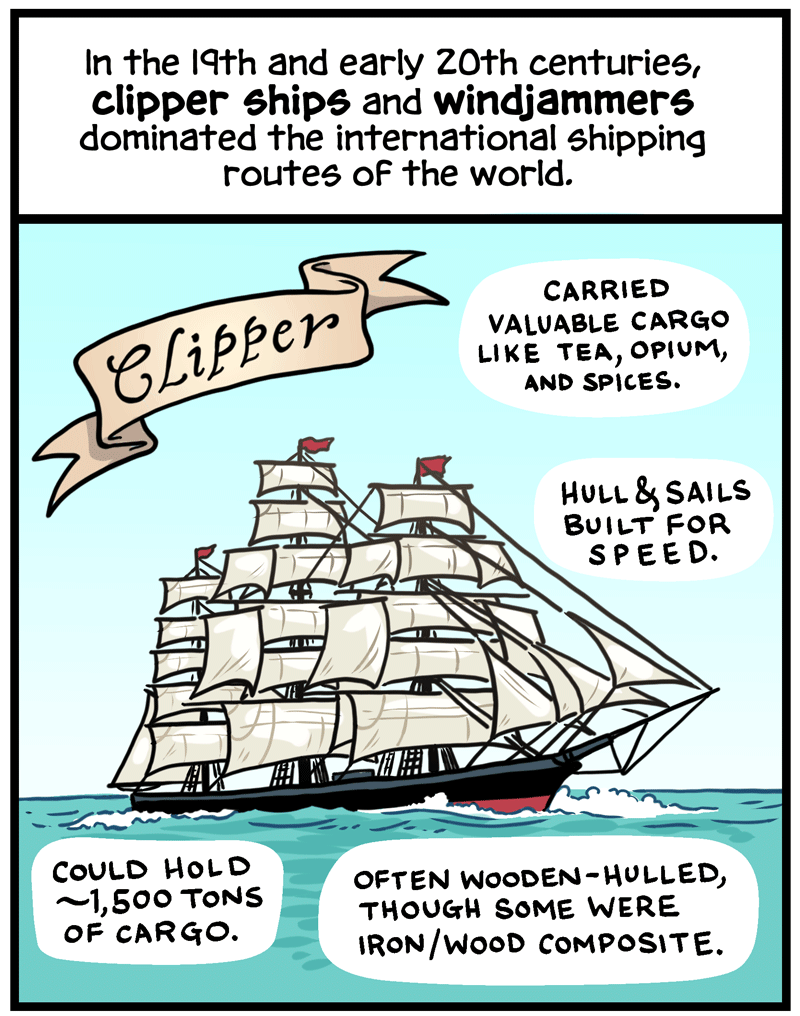
As some of you might recall from this essay, I spent the latter half of 2025 working on a comic for the Ships of the Sea Maritime Museum in Savannah, Georgia. Tania Sammons, a curator at the museum who had previously licensed my guide to sailors’ tattoos for a show, wrote to me with an irresistible pitch: four cartoonists would be hired, assigned a vessel from the museum’s extensive collection of models, then given six months to produce a short comic for publication in an anthology alongside an accompanying museum display.

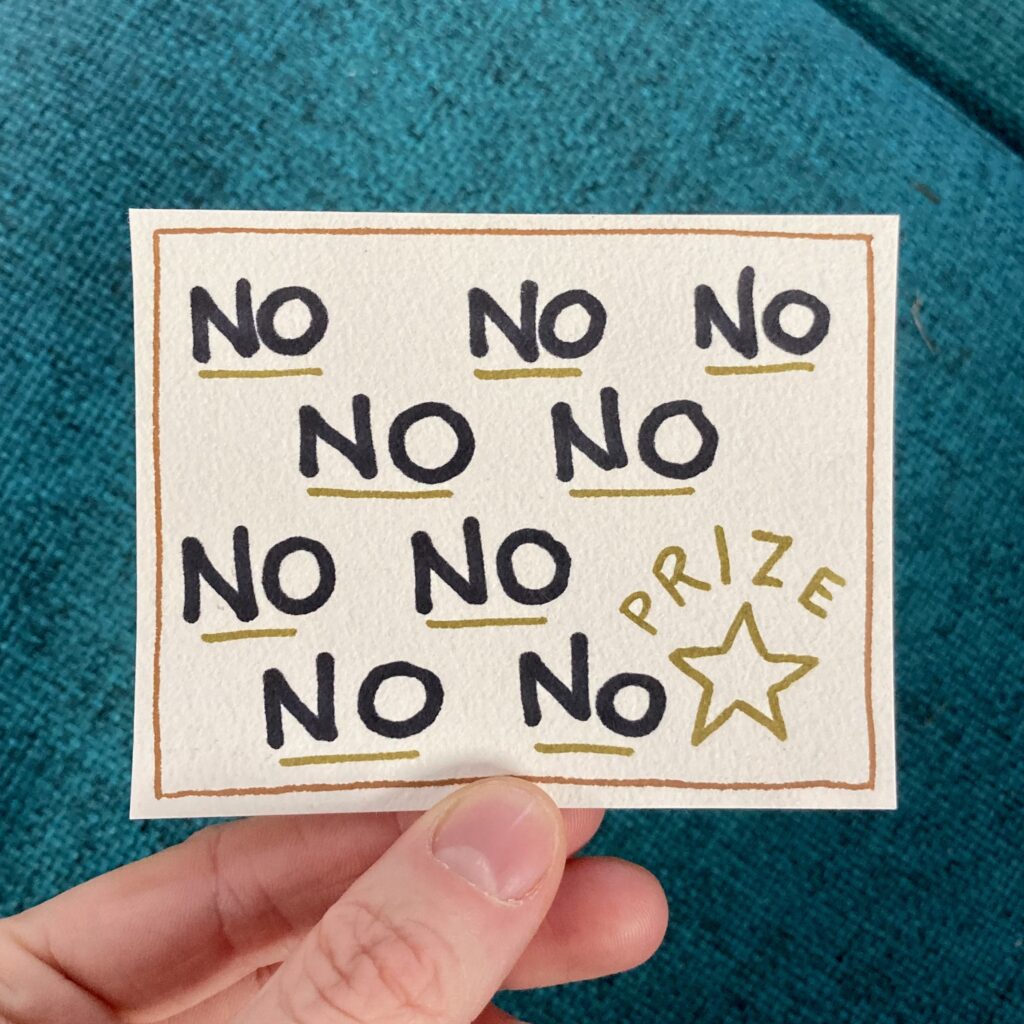
How could I say no?

My original brief was to research the Anne, the ship that brought the first colonists to Georgia, but in the aftermath of my dad’s death the story took off in directions I couldn’t have foreseen.

Unexpected research moment: running into my own work at the Santa Barbara Maritime Museum while hunting for a particular model ship.

I’m tempted to write up a great big description of the whole process, because I’m out of practice releasing things and it feels as if there’s so much to explain, but I’d like to let the comic speak for itself. I’ll include my artist statement and a couple photos from the museum exhibit below, and if you happen to be in Savannah you can stop by and see it all in person starting Friday, May 1st! More details about that here.

Content Warning: this comic deals with suicide and parental mortality. Readers with trypophobia may want to skip pages 14 and 15.


Exhibit Preview


Artist Statement

I joined the crew of my first tall ship at seventeen. I know more than most the temptation to cast a vessel as the hero of the story, but it’s a lie. We name them, adorn them, and rely on them, but ultimately ships are tools enlivened by the people who use them. They encompass exploration and cultural exchange, escape and immigration, enslavement and genocide. Rather than flattening the ship into a hero, I want to examine the ship as a vessel in every sense of the word, one brimming with discoveries and losses alike. 

In her essay The Carrier Bag Theory of Fiction, Ursula K. Le Guin invites us to explore the implication of the container as the oldest human invention. What would it mean to acknowledge that we have carried sustenance and stories in baskets, nets, and bottles for far longer than we have centered narratives around a Hero’s Journey built on aggression and conquest? “It’s hard,” she admits, “to tell a really gripping tale of how I wrested a wild-oat seed from its husk, and then another, and then another, and then another, and then another—” but the essay encourages us to try.

Whether framing the hull of a ship or the panels of a story, we delineate the things we love. It is an affection that cannot be rushed. I was lucky enough to learn from many model ship builders in the course of creating this piece. Their generosity, enthusiasm, and expertise helped me appreciate what’s poured into each miniature vessel, and to recall something I need to keep close in my own practice: there is value in doing things that defy efficiency. These are fields where monotony walks hand in hand with craft. Some people throw their hands up and bemoan the death of such practices in the age of AI, but I believe we’re headed toward a resurgence in valuing the things machines cannot do.

There is nothing more human than dying. Steeped in my own grief at the loss of my father, I found my way into a story that took me places I couldn’t have foreseen. Early in the research process, I read that the colonists aboard the Anne slept below decks in suspended wooden cots—their similarity to coffins a reminder of how often such voyages become a passage to the underworld. Every journey requires a type of death. We leave behind our former selves, hoping to meet some new incarnation on the farther shore, but the past always comes with us in one guise or another. 

We don’t know what became of the Anne in the end; her own death, whatever that means for a vessel, went undocumented. Sometimes such losses are inevitable. But the containers we build, whether they be ships, comics, or museums, offer us a chance to see ourselves woven into the minutiae of the past. It is a form of immortality, one that relies on engagement, imagination, and tenderness, and it is always worth reaching for.


Thanks for reading <3

L

2025 in Reading

Another annual reading list I’m putting up without much commentary, but there were some bangers in 2025. “The point seems to be this,” Kate Briggs writes, “left to its own devices, the path of reading is very rarely chronologically ordered, thematically coherent, limited by language or respectful of borders. Books open out onto, they cross with and follow haphazardly on from one another. Left to its own devices, the path of reading strays all over the place.”

(Previously: 2024 in Reading, 2023 in Reading2022 in Reading2021 in Reading2020 in Reading)

LegendRough Guide to Ratings
🎭 – Plays
📝 – Poetry
📖 – Books (Fiction)
📓 – Books (Nonfiction)
💬 – Graphic Novels
🔄 – Reread
🎙️ – Audiobook
❤︎ = Yes
❤︎❤︎ = Oh Yes
❤︎❤︎❤︎ = Oh Hell Yes
  1. 📓 A Month in Siena – Hisham Matar ❤︎❤︎❤︎
  2. 🎙️ / 📓 This Nonviolent Stuff’ll Get You Killed – Charles E. Cobb Jr.
  3. 📖 Sisters – Daisy Johnson ❤︎
  4. 📓 Come Together – Emily Nagoski
  5. 🎙️ / 📖 His Majesty’s Dragon – Naomi Novik
  6. 🔄 / 🎙️ / 📖 Sabriel – Garth Nix
  7. 📖 The Captain of the Polestar – Arthur Conan Doyle
  8. 💬 / 📖 As the Crow Flies – Melanie Gilman
  9. 💬 / 📖 Skip – Molly Mendoza
  10. 🔄 / 🎙️ / 📖 Lirael – Garth Nix
  11. 📖 The Diary of Mr. Poynter – M.R. James
  12. 📖 The Morgan Trust – R. Bridgeman
  13. 💬 / 📖 Sunhead – Alex Assan
  14. 📖 Creation Lake – Rachel Kushner ❤︎
  15. 📓 Inciting Joy – Ross Gay ❤︎❤︎❤︎
  16. 💬 / 📖 Across a Field of Starlight – Blue Delliquanti ❤︎❤︎❤︎
  17. 🎙️ / 📖 Abhorsen – Garth Nix
  18. 📖 Martyr! – Kaveh Akbar ❤︎
  19. 📖 Memorial – Bryan Washington ❤︎❤︎
  20. 📖 The Vanishing Half – Brit Bennett ❤︎
  21. 💬 / 📖 Squire – Sara Alfageeh and Nadia Shammas
  22. 🔄 / 💬 / 📖 Giant Days Vol. 3 – John Allison & Max Sarin
  23. 📓 The Noble Approach – Tod Polson & Maurice Noble ❤︎❤︎
  24. 🎙️ / 📓 ADHD 2.0 – Edward M. Hallowell, M.D.
  25. 📖 Madness is Better than Defeat – Ned Beauman
  26. 📓 The Drummer and the Great Mountain – Michael Joseph Ferguson
  27. 📖 Return to Sender – Vera Brosgol
  28. 🔄 / 🎙️ / 📖 The Republic of Thieves – Scott Lynch
  29. 📓 The Creative Act: a Way of Being – Rick Rubin and Neil Strauss ❤︎
  30. 💬 / 📖 Rare Flavors – Ram V & Filipe Andrade ❤︎❤︎❤︎
  31. 📓 The Saviors of God – Nikos Kazantzakis
  32. 🎙️ / 🎭 Arcadia – Tom Stoppard
  33. 📓 I’m Mostly Here to Enjoy Myself – Glynnis MacNicol ❤︎
  34. 📓 The Duchess of Bloomsbury Street – Helene Hanff
  35. 💬 / 📖 The Many Deaths of Laila Starr – Ram V and Filipe Andrade ❤︎
  36. 💬 / 📖 Boys Weekend – Mattie Lubchansky
  37. 💬 / 📖 The Jellyfish – Boum
  38. 💬 / 📓 Offhand – Yuko Ota
  39. 🔄 / 📖 Finn Family Moomintroll – Tove Jansson ❤︎❤︎
  40. 💬 / 📖 Witchlight- Jessi Zabarsky
  41. 📓 Gift from the Sea – Anne Morrow Lindbergh ❤︎❤︎
  42. 💬 / 📖 Sunburn – Andi Watson and Simon Gane
  43. 💬 / 📖 The Book Tour – Andi Watson ❤︎
  44. 🔄 📓 Unmastered – Katherine Angel ❤︎❤︎
  45. 🎙️ / 📖 The Thief – Megan Whalen Turner
  46. 📖 Art & Lies – Jeanette Winterson ❤︎❤︎❤︎
  47. 📝 The Inferno – Dante (trans. Henry Wadsworth Longfellow)
  48. 💬 / 📖 Fly by Night – Tara O’Connor
  49. 🎙️ / 📓 Catching the Big Fish – David Lynch
  50. 📓 Eros the Bittersweet – Anne Carson ❤︎❤︎❤︎
  51. 📓 Art [Objects] – Jeanette Winterson ❤︎❤︎❤︎
  52. 📓 Power of Gentleness – Anne Dufourmantelle ❤︎❤︎
  53. 📓 / 💬 / 📓 One Bite at a Time – Ryan Claytor ❤︎
  54. 📓 A Year in Practice – Jacqueline Suskin ❤︎
  55. 🔄 📖 The Amazing Adventures of Kavalier & Clay – Michael Chabon ❤︎❤︎
  56. 📖 We Play Ourselves – Jen Silverman ❤︎❤︎❤︎
  57. 📓 Think Little – Wendell Berry ❤︎❤︎❤︎
  58. 🎙️ / 📖 The Heart in Winter – Kevin Barry
  59. 📓 No Bad Parts – Richard C. Schwartz ❤︎❤︎
  60. 💬 / 📓 Past Tense – Sacha Mardou ❤︎
  61. 💬 / 📖 Fresh Start – Gale Galligan ❤︎❤︎❤︎
  62. 💬 / 📖 A Girl on the Shore – Inio Asano
  63. 🎙️ / 📓 / 📖 Pathemata – Maggie Nelson
  64. 🔄 / 💬 / 📓 It’s Okay That It’s Not Okay – Christina Tran ❤︎❤︎
  65. 💬 / 📓 Home/World – Ben Hatke ❤︎❤︎❤︎
  66. 📓 The Light of the World – Elizabeth Alexander ❤︎❤︎❤︎
  67. 🔄 / 📖 The Voyage of the Dawn Treader – C. S. Lewis ❤︎
  68. 📓 Faith, Hope, and Carnage – Nick Cave and Seán O’Hagan ❤︎❤︎

2024 in Reading

Turns out I’m two years behind on these so I’m getting ’em up! No commentary because I gotta run out the door to ink more pages of Seacritters, but hopefully I’ll come back to this down the line.

(Previously: 2023 in Reading2022 in Reading2021 in Reading2020 in Reading)

LegendRough Guide to Ratings
🎭 – Plays
📝 – Poetry
📖 – Books (Fiction)
📓 – Books (Nonfiction)
💬 – Graphic Novels
🔄 – Reread
🎙️ – Audiobook
❤︎ = Yes
❤︎❤︎ = Oh Yes
❤︎❤︎❤︎ = Oh Hell Yes
❤︎❤︎❤︎❤︎❤︎ = Obviously this one hit at the right place and the right time
  1. 📖 The Raven Tower – Ann Leckie
  2. 📖 The Night Manager – John Le Carré
  3. 💬 / 📓 It’s Lonely at the Centre of the Earth – Zoe Thorogood
  4. 📖 Network Effect – Martha Wells
  5. 📓 The Beauty in Breaking – Michele Harper
  6. 💬 / 📓 The Five Lives of Hilma Af Kilnt – Philipp Deines
  7. 📖 The Fermata – Nicholson Baker
  8. 📖 Birnam Wood – Eleanor Catton ❤︎❤︎
  9. 📖 The Luminaries – Eleanor Catton
  10. 🎙️ / 📖 Lightning Rods – Helen DeWitt
  11. 📖 Prophet – Sin Blaché & Helen Macdonald ❤︎
  12. 📓 Holy the Firm – Annie Dillard ❤︎❤︎
  13. 🎙️ / 📖 Making Money – Terry Pratchett
  14. 📖 Excession – Ian M. Banks
  15. 📓 Your Money or Your Life – Vicki Robin & Joe Dominguez
  16. 📓 Subculture Vulture – Moshe Kasher
  17. 📖 The Adventures of Amina al-Sirafi – Shannon Chakraborty ❤︎
  18. 📝 The Peace of Wild Things – Wendell Berry ❤︎❤︎❤︎
  19. 📓 The Liars’ Club – Mary Karr ❤︎❤︎
  20. 🎙️ / 📖 The Lies of Locke Lamora – Scott Lynch
  21. 💬 / 📓 And Now I Spill the Family Secrets – Margaret Kimball
  22. 💬 / 📖 Sex Criminals Vols. 1-6 – Matt Fraction & Chip Zdarsky ❤︎❤︎
  23. 🎙️ / 📖 Red Seas Under Red Skies – Scott Lynch
  24. 📓 Travelers to Unimaginable Lands – Dasha Kiper ❤︎
  25. 💬 / 📖 Safari Honeymoon – Jesse Jacobs
  26. 📓 What If This Were Enough? – Heather Havrilesky
  27. 📖 Oliver VII – Antal Szerb
  28. 💬 / 📓 How to Understand Israel in 60 Days or Less – Sarah Glidden
  29. 🎙️ / 📖 The Republic of Thieves – Scott Lynch
  30. 📝 44 Poems for You – Sarah Ruhl
  31. 📓 Wild – Cheryl Strayed
  32. 📓 Saving Time – Jenny Odell ❤︎❤︎❤︎❤︎❤︎
  33. 🎙️/📖 The Thursday Murder Club – Richard Osman
  34. 📓 The Wild Edge of Sorrow – Francis Weller ❤︎❤︎
  35. 🎙️ / 📖 Nothing to See Here – Kevin Wilson
  36. 🎙️ / 📖 The City of Brass – S.A. Chakraborty
  37. 💬 / 📓 The Worst Journey in the World: Vol. 1 – Sarah Airriess, adapted from Apsley Cherry-Garrard ❤︎
  38. 📓 Smile: The Story of a Face – Sarah Ruhl ❤︎❤︎
  39. 📓 Gender/Fucking – Florence Ashley
  40. 💬 / 📖 Pixels of You – Ananth Hirsh, Yuko Ota, J.R. Doyle
  41. 📓 Mr. Wilson’s Cabinet of Wonder – Lawrence Weschler / Visitng The Museum of Jurassic Technology IRL ❤︎❤︎❤︎
  42. 💬 / 📖 Waverider (Amulet Book 9) – Kazu Kibuishi
  43. 📖 Women Talking – Miriam Toews
  44. 🎙️ / 📖 The Kingdom of Copper – S.A. Chakraborty
  45. 📓 Care: The Highest Stage of Capitalism – Premilla Nadasen ❤︎❤︎
  46. 🔄 📓 Steal Like an Artist – Austin Kleon
  47. 💬 / 📖 Danger and Other Unknown Risks – Ryan North & Erica Henderson ❤︎❤︎❤︎
  48. 💬 / 📖 Lightfall: The Dark Times – Tim Probert
  49. 🎙️ / 📖 The Empire of Gold – S. A. Chakraborty
  50. 🎙️ / 📖 Night Boat to Tangier – Kevin Barry ❤︎❤︎❤︎
  51. 📖 Funny Story – Emily Henry
  52. 💬 / 📖 Stargazing – Jen Wang
  53. 💬 / 📓 In Limbo – Deb JJ Lee
  54. 🎙️ / 📖 The Midnight Library – Matt Haig
  55. 📓 Four Thousand Weeks – Oliver Burkeman ❤︎
  56. 💬 / 📓 Coma – Zara Slattery
  57. 📓 The Long Run: A Creative Inquiry – Stacey D’Erasmo ❤︎❤︎
  58. 📓 Mutual Aid – Dean Spade
  59. 🎙️ / 📖 The Book of Love – Kelly Link
  60. 📖 Red, White, and Royal Blue – Casey McQuiston
  61. 🎙️ / 📖 Godkiller – Hannah Kaner
  62. 📖 Whoever You Are, Honey – Olivia Gatwood ❤︎
  63. 🎙️ / 📖 Sunbringer – Hannah Kaner
  64. 🎙️ / 📓 Driven to Distraction – Edward M. Hallowell & John J. Ratey
  65. 🎙️ / 📓 A Heart That Works – Rob Delaney ❤︎
  66. 📖 Nervous Conditions – Tsitsi Dangarembga
  67. 📓 Slouching Towards Bethlehem – Joan Didion ❤︎❤︎

Unfinished but Made Progress

  1. The Nature Book – Tom Comitta
  2. Annals of the Former World – John McFee
  3. The Divine Comedy – Dante
  4. Come Together – Emily Nagoski
  5. Wildwood – Roger Deakin
  6. The Idle Beekeeper – Bill Anderson
  7. Bear – Marian Engel
  8. This Nonviolent Stuff’ll Get You Killed – Charles E. Cobb Jr.
  9. A Month in Siena – Hisham Matar

Making Nonfiction Comics Event in Ojai

One week from today (Tuesday, December 16th at 6pm) I’ll be at my beloved local outdoor bookstore, Bart’s Books, for an interactive evening with fellow Ojaian and powerhouse cartoonist Shay Mirk.

We’re celebrating the publication of Making Nonfiction Comicsa comprehensive illustrated guide for everyone who’s ever wanted to tell stories about the world around us in words and pictures. (If you can’t make the event, that link takes you to bookshop.org where you can buy the book online.)

Look at this chonker!

This beast is a collaboration between Shay and fellow cartoonist Eleri Harris and it is so!! good!!! In addition to Eleri and Shay’s hard-won expertise, there are also interviews and tips from so many big names in the field. You can learn about crafting everything from on-the-ground protest reportage to deep dive historical research to authentic personal narrative. This book is going to be the gold standard for years to come.

I feel lucky to have a brief cameo talking about running a community drawing night in Portland for several years in the twenty teens. Here’s a look at that:

This baby can fit so many cartoonists in it! (2013)

If you’re in the area, do come by. I’m gonna show off some kelp farming comics, Shay’s gonna talk about making the book, it’s gonna be very fun. Ojai may be 80º during the day right now, but it gets chilly after dark, so bundle up! We’ll have zine templates for folks to fill out and fun slides to share and, knowing Shay, killer snacks.

Hyde and Eroticism

A quick one to say I’ve been thinking a lot about the different subtitles they’ve slapped on Lewis Hyde’s The Gift through the years, mostly because it was only this year I learned that the original 1983 edition looked like this:

The Gift: Imagination and the Erotic Life of Property by Lewis Hyde

I LOVE IT. WHY DID THEY CHANGE IT. WHAT GIVES.

The whole thing is a far cry from 2019’s:

The Gift: How the Creative Spirit Transforms the World by Lewis Hyde

As well as the copy I first encountered (published in 2007), which features a third option:

The Gift: Creativity and the Artist in the Modern World by Lewis Hyde

Which is…fine? It’s fine.

BUT WHO BURIED THE LEDE ON THE EROTIC LIFE OF PROPERTY?!

Audre Lorde originally presented “Uses of the Erotic: The Erotic as Power” as a paper in 1978, but it wasn’t published in Sister Outsider until 1984—just one year after the first edition of The Gift came out.

Sister Outsider Essays and Speeches by Audre Lorde
(There’s a nice write-up of this design on Fonts in Use, if you’re into that sort of thing, *cough*ROBIN*cough*)

I wonder about this post-70s literary landscape, everything still reverberating with the energy of the 60s, the explosive visibility of sexuality in American youth culture, the rising tide of queer voices—but also the broader definition of eroticism.

I just re-read Katherine Angel’s Unmastered: a Book on Desire, Most Difficult to Tell, which I picked up after Tomorrow Sex Will Be Good Again. Her exploration of eroticism veers more towards the question of what to do with desire that resists being codified, named, and negotiated in explicit terms. How do we reckon with consent culture alongside the lure of the unknown? What of discovery? What of the secret third thing?

Kate Wagner coming in at the right moment here with this essay:

A situational eroticism is what is needed now, in our literalist times. […] Arousal is a matter of the self, which takes place within the body, a space no one can see into. It is often a mystery, a surprise, a discovery. It can happen at a small scale, say, the frisson of two sets of fingers in one’s hair at once. It is beautiful, unplanned and does not judge itself because it is an inert sensation, unimbued with premeditated meaning. This should liberate rather than frighten us. Maybe what it means doesn’t matter. Maybe we don’t have to justify it even to ourselves. 

This draft has been languishing because I don’t have a neat bow to slap on the end of this. If there’s anything I’m thinking of, though, it’s that Hyde (or his publisher) wasn’t wrong to foreground eroticism in that first edition of the book. Eroticism is creativity, and neither are as much work as they are play.

Maximum Melville

A number of fantastic ducks lined up in the month of June and I want to talk about all of them, but there isn’t time to do it in one giant post. One duck, however, took the form of appearing at the 14th International Melville Society Conference to speak about my time aboard the Charles W. Morgan eleven years ago. (You can read the comic about that trip here.)

A spread from Lucy's comic, Down to the Seas Again.

I read Moby-Dick for the first time a handful of years ago and loved it, but I wouldn’t call myself a Melville scholar. However, attending this conference felt like a great chance to scratch the academic itch without, say, going to grad school.

I ended up spending the whole week taking visual notes, which allowed me to drop into a type of weightless, fixated attention that I’ve really missed in my caregiving life. It also helped give me something to do during panels where I felt a little, uh, out of my depth.

A sample of illustrated speakers from the Melville Society Conference.

When I’m drawing, words just wash over me. I can pluck the ones that resonate in the moment, then step back at the end of the hour and get a picture of what I took away from the talk. I particularly loved the freedom to just wander into panels where I had no idea what the speakers were talking about, only to come away newly-enthused about some niche avenue into Melville’s work.

A photo of an auditorium full of Melville scholars.

Time and time again the attendees emphasized how unique this conference is in its warmth and intellectual diversity. I met scientists and art historians and medievalists and printmakers and disability scholars and tall ship sailors and filmmakers and many, many professors. It was a dreamy, albeit intense, four days.

Here are the notes from every talk I attended, all drawn straight to ink during the speakers’ presentations (usually about 20 minutes per person).

The biggest takeaway was that we need embedded cartoonists at all sorts of academic conferences—and the demand is there! People were so thrilled to see this kind of work coming out of the event, and there are lots of journals hungry to publish unusual creative content alongside academic papers.

Something to pursue…eventually. Got a couple things* to wrap up first.

*unfathomably vast creative projects

Measurement/Metric

“It is maybe not functionally possible to design social networked technology geared towards listening. I don’t know, I’m not that smart. But the fact that the internet doesn’t have a mechanism for listening means that we’ve invented these kludgy quantification mechanisms to try and detect attention, and it is easy, so incredibly easy there are multiple books written about this, to confuse the thing you’re measuring for the metric itself.

I want to know who is visiting my site and whether they’re returning visitors and what pages they clicked through and for how long because it gives me the illusion of knowledge and control. Maybe I’ll know my project is connecting with people if I just hit some arbitrary threshold of pageviews, subscribers, conversion rate.

But none of that will tell me the thing I actually want to know, which is: am I making a difference?”

Hey I loved this. It also reminded me to go check up on the phone line and see if there were any messages that needed witnessing. I keep them close to the chest because that’s part of the project, but I will say that there were and they moved me to tears. Maybe that’s what it’s all about.